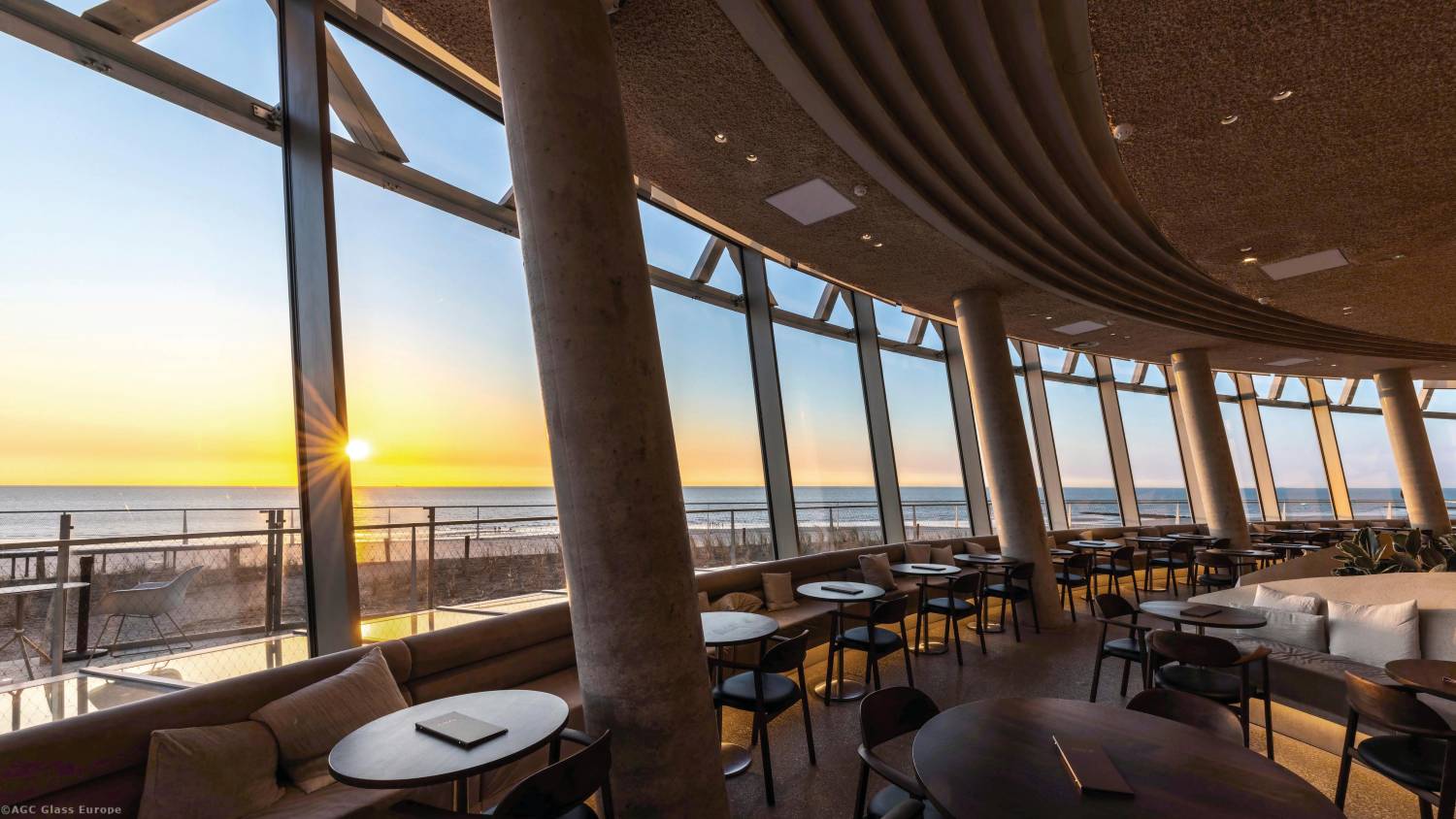
An architect’s vision is a delicate balance between aesthetics, functionality, and performance. Every line, every material is chosen to serve a greater project. Yet one major technical constraint often disrupts this harmony: mobile connectivity. A critical question then arises: How can this absolute need for in-building connectivity be integrated without compromising the integrity of a design?
The Architect’s Dilemma: Performance vs. Aesthetics
Modern façades, with their high-performance thermal glazing, are essential for energy efficiency. But their metallic composition — the Low-E coating, a thin layer inside the double glazing — has a major side effect: it massively blocks mobile signals, just like other insulating materials containing metal, effectively creating a “Faraday cage.” To address this issue, the traditional solution has long been the DAS system (Distributed Antenna System). But it comes at a heavy aesthetic cost:
- Visual pollution: Antennas must be distributed across ceilings, cables run along walls, and technical enclosures appear in common areas.
- Space constraints: Dedicated technical rooms — air-conditioned and secured — must be planned, eating into usable or leasable floor space.
The Façade: From Problem to Solution
Rather than compensating for signal blocking with heavy internal infrastructure, the passive approach tackles the problem at its root. WAVETHRU technology does not see glazing as an obstacle, but as an opportunity. Here’s how.
- A surgical and invisible intervention: A fully patented, high-precision laser treatment creates selective micro-structures within the metallic coating of the glass. These “gateways” are invisible to the naked eye, yet allow 2G, 3G, 4G, 5G, and TETRA frequencies to pass through — and will continue to do so for future technologies (6G, etc.)
- Total preservation of aesthetics: The appearance, colour, transparency, and thermal performance of the glazing remain entirely unchanged. The treatment is virtually invisible to the naked eye. The design is therefore fully respected.
Unlocking Architectural Creativity
This approach is a game-changer for designers.
- No more compromises: Architects can specify the highest-performing glazing on the market without worrying about the impact on connectivity.
- Seamless integration: Technology is no longer an unsightly add-on, but an intrinsic property of the building envelope. It merges with the material itself.
- Simplicity from the design stage: No more need to plan complex cable runs or dedicated technical rooms for mobile connectivity.
Invisible connectivity is no longer a dream — it is the result of intelligent development born within the R&D centre of one of the major players in the glass industry, AGC. By addressing the problem at its source, WAVETHRU reconciles high energy performance and architectural purity with the demands of an ultra-connected world. It gives architects the freedom to design beautiful, sustainable, and functional buildings — without any compromise.


