Healthcare Facilities
Grand Hôpital de Charleroi (GHdC)
Project type
Hospital
Date
November 2026
Location
Charleroi, Belgium
Grand Hôpital de Charleroi — Les Viviers site
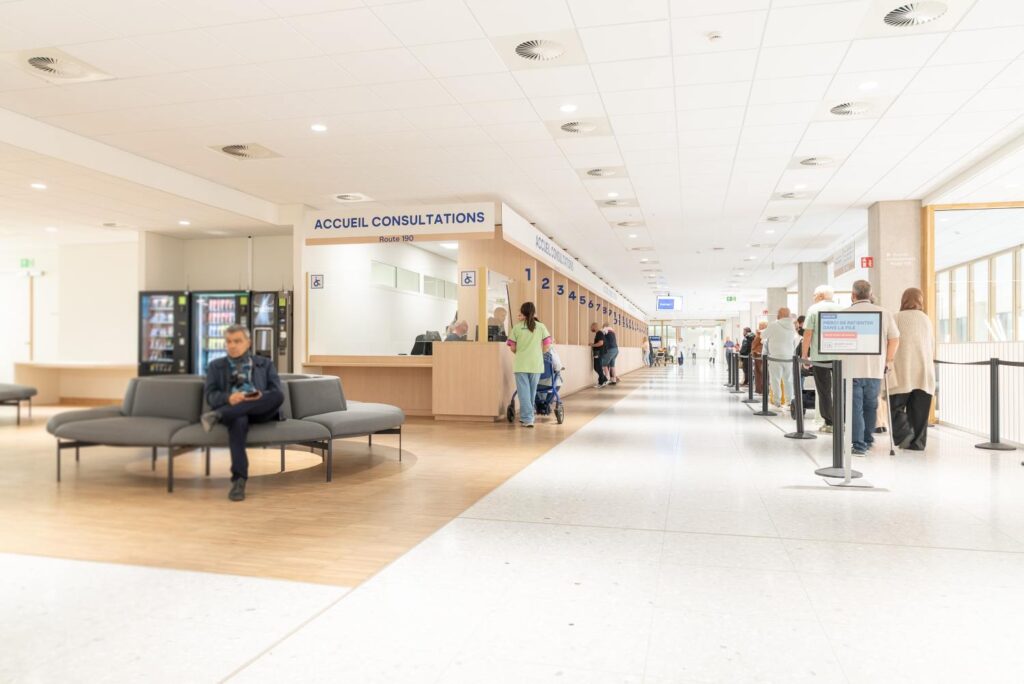
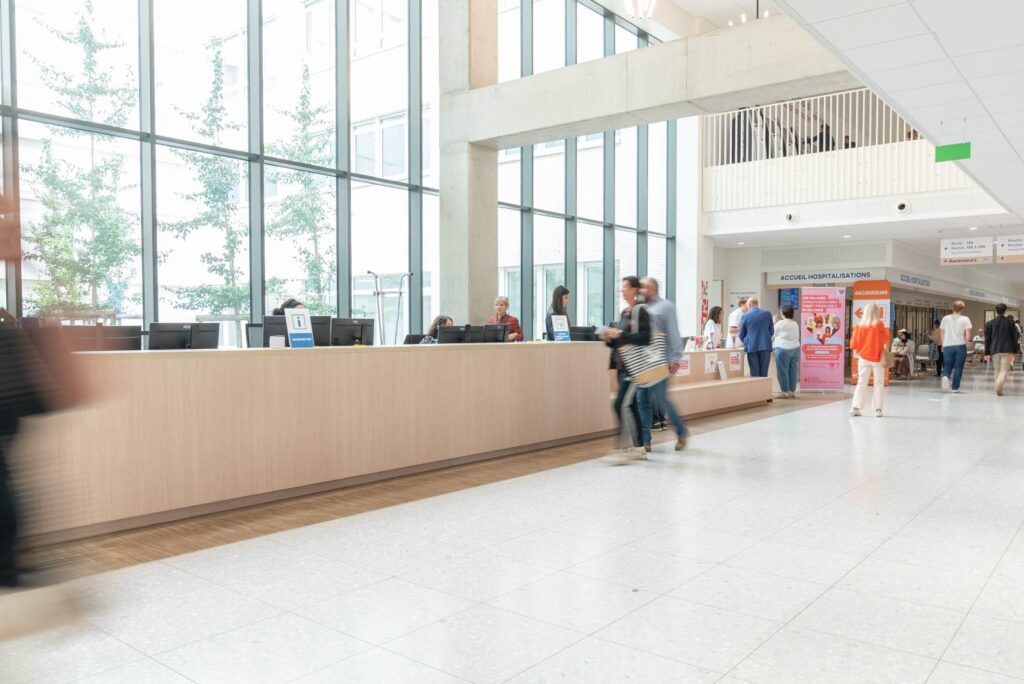
Opened in Gilly from June 2024, the Les Viviers site brings together the activities of the Grand Hôpital de Charleroi in a hospital building covering approximately 145,000 m² and providing around 900 beds.
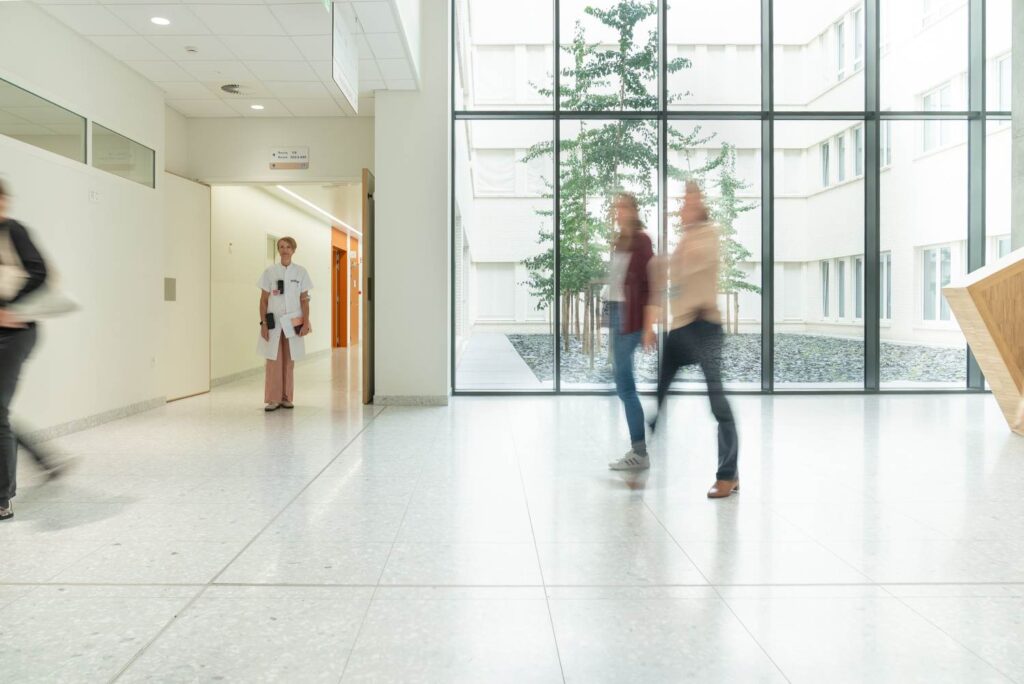
Like many modern buildings, the hospital has highly insulating glazing. Its metallic coating helps improve the building’s energy performance, but also attenuates radio waves. This made indoor mobile connectivity an important issue for staff and building users.
Location: Gilly, Charleroi, Belgium
Building: Hospital in operation
Scale: Approximately 145,000 m² and 900 beds
Project year: 2026
Improving mobile connectivity without disrupting hospital operations
A hospital brings together around 200 different professions, and staff need to be contactable throughout the day.
During the design of the Les Viviers site, the Grand Hôpital de Charleroi identified the question of indoor mobile reception. However, no specific action was taken at that stage. The issue became tangible once the new hospital opened: the highly insulating glazing helped improve the building’s energy performance, but also limited the passage of radio waves.
By then, construction and finishing work was well advanced. Installing a new indoor network infrastructure would have required additional equipment and work, potentially including reopening ceilings. The GHdC therefore needed a solution suited to an operational hospital and its care environment.
WAVETHRU is available both as a treatment for existing glazing and as an option for new glazing projects. At Les Viviers, the chosen solution was to laser-treat the glazing already installed.
“We work in a medical environment, so we can’t do just anything at any time.”
— Mickaël Keun, Telecommunications Project Manager, Grand Hôpital de Charleroi
Treating the glazing with a laser
The GHdC selected WAVETHRU, a solution designed to improve the passage of radio waves through glazing without replacing the existing glass or installing an antenna at every location.
A high-precision laser robot treats part of the glazing’s metallic coating by creating a microscopic pattern. This helps mobile signals pass through the glass while preserving its insulating properties and the appearance of the building.
Before the solution was deployed more widely, tests were carried out on glazing in selected hospital departments. The improvement observed for 4G and 5G convinced the GHdC teams to proceed with treatment across the site.
A large-scale project carried out in an operational hospital
- 4,500 panes of glass treated at the Les Viviers site
- Two laser robots used for the project
- More than six months of treatment
- Work planned around hospital operations, including early mornings and some weekends
- Approximately 1.5 metres of space needed in front of each window for the robot
The work was organised to fit around the hospital’s day-to-day activities. WAVETHRU’s teams worked progressively, following a schedule adapted to the needs of the site and its medical services.
A noticeable improvement in everyday connectivity
Following the treatment, GHdC users reported an improvement in mobile connectivity. The hospital’s teams said that 4G and 5G signals worked better than before in the areas concerned.
WAVETHRU treatment allows approximately 50% of the signal to pass through the glazing, compared with approximately 1% for untreated glazing. This figure refers to signal transmission through the glazing; the mobile coverage available in any specific area can also depend on the network, the location and local conditions.
“Today, users tell us: ‘We don’t have a problem anymore; everything is working well.’”
— Pierre Jacmin, Director of Facility Management, Grand Hôpital de Charleroi
“It rings, it connects, it communicates! There is less frustration and less stress. The solution has very likely improved quality of working life.”
— Véronique Guilmot, HR Manager, Grand Hôpital de Charleroi
A solution implemented with hospital operations in mind
The project brought together the Grand Hôpital de Charleroi, WAVETHRU and the technical teams working on site. The challenge was to complete a large-scale glazing treatment while accommodating the needs of a hospital caring for patients and supporting staff and visitors.
Work was scheduled for early mornings and some weekends to help limit disruption to hospital activities. GHdC representatives described the project as running smoothly and reported that users noticed an improvement in connectivity.
“Everything went very smoothly; we had no problems.”
— Pierre Jacmin, Director of Facility Management, Grand Hôpital de Charleroi